
Revisional Bariatric Surgery Sydney
Specialist Weight Loss Revision Surgery | A/Prof Craig Taylor | OClinic
Weight loss surgery can produce substantial and lasting improvements in weight and metabolic health. However, some patients experience inadequate weight loss, regain weight over time, or develop complications related to their original procedure.
Revisional bariatric surgery offers an opportunity to improve weight loss, restore the effectiveness of previous surgery, or correct problems that have developed.
Associate Professor Craig Taylor has performed more than 2,500 revisional bariatric procedures, making complex revisional and corrective surgery a major focus of his specialist practice. With over 20 years of consultant-level experience and more than 10,000 surgical procedures performed, he regularly assesses patients referred from across Australia following previous gastric banding, sleeve gastrectomy and gastric bypass surgery.
Our approach is to identify why the original procedure is no longer achieving the desired outcome and recommend the safest and most appropriate treatment for each patient.
What Is Revisional Bariatric Surgery?
Revisional bariatric surgery involves modifying, converting, reconstructing or reversing a previous weight loss operation.
There are two broad reasons for considering further surgery:
- Improving weight loss and metabolic outcomes
Some patients experience insufficient weight loss following their original procedure, while others initially lose substantial weight but subsequently regain some or much of it.
Revision may improve the restrictive or metabolic effects of the original operation, helping patients achieve better long-term weight control.
- Correcting complications or unwanted side effects
Other patients develop problems such as severe reflux, regurgitation, swallowing difficulties, vomiting, abdominal pain, diarrhoea or nutritional deficiencies.
In these circumstances, the priority is to correct the underlying anatomical or functional problem, ideally while preserving the benefits of the original weight loss surgery.
Revisional and corrective bariatric procedures constitute a major part of our day to day work at OClinic, with patients travelling from all over Sydney, regional NSW and interstate to seek treatment, individually tailored to the patient's circumstances.
Why Does Weight Regain Occur After Bariatric Surgery?
Obesity is a chronic, long term, genetically and biologically driven condition. Weight regain does not necessarily indicate that the patient has done anything wrong or that the original surgery was unsuccessful.
Over time, the body's hormonal and metabolic adaptations can increase appetite and encourage weight regain. Anatomical changes, such as enlargement of a gastric pouch or sleeve, may also reduce the effectiveness of the original procedure.
Other contributing factors can include changes in eating patterns, medications, reduced physical activity and the natural progression of obesity as a chronic disease.
A careful assessment helps determine whether the most appropriate approach is nutritional and behavioural support, weight loss medication, further surgery or a combination of treatments.
Not everyone who regains weight needs further surgery. Our focus is to provide an honest, objective assessment of your individual circumstances, helping you understand all available treatment options and make a fully informed decision about the approach that is right for you.
What Types of Revisional Bariatric Surgery Are Available?
A/Prof Taylor performs a comprehensive range of advanced laparoscopic revisional procedures, including:
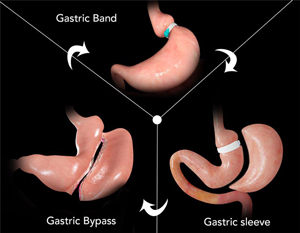
Gastric Band Revision or Removal
Gastric bands may become less effective over time or cause complications such as reflux, regurgitation, food intolerance, oesophageal dilatation, band slippage or erosion.
Treatment options include:
- Removal of the gastric band
- Conversion from gastric band to sleeve gastrectomy
- Conversion from gastric band to gastric bypass
Depending on the condition of the stomach and surrounding tissues, conversion may be performed during the same operation or as a staged procedure.
Revisional Surgery After Sleeve Gastrectomy
Sleeve gastrectomy is an effective weight loss operation, but some patients experience inadequate weight loss, subsequent weight regain or troublesome reflux.
Potential revisional procedures include:
- Conversion to Roux-en-Y gastric bypass
- Conversion to one-anastomosis gastric bypass
- Conversion to SADI-type metabolic surgery in appropriately selected patients
- Revision or reshaping of a dilated gastric sleeve
- Anatomical correction of sleeve-related complications
The choice depends on the patient's weight, metabolic health, reflux symptoms, previous anatomy and nutritional status.
For example, Roux-en-Y gastric bypass is often preferred when severe reflux is a major concern (such as ulcerative oesophagitis or Barretts), whereas other metabolic procedures such as the Bipartition SADI procedure may be more appropriate when the primary objective is additional weight loss.
Revisional Surgery After Gastric Bypass
Although gastric bypass provides excellent long-term results for many patients, further surgery may occasionally be required.
Reasons include inadequate weight loss, weight regain, pouch or anastomotic enlargement, severe reflux, marginal ulceration, abdominal pain or nutritional complications.
Depending on the original procedure, revision may involve:
- Resizing or reconstructing the gastric pouch or surgical connection
- Modifying the intestinal bypass configuration
- Conversion between different types of gastric bypass
- Correcting internal hernias or other anatomical complications
- Partial or complete reversal of the bypass when medically indicated
These procedures are technically demanding and require detailed knowledge of altered gastrointestinal anatomy.
Revision of Older Weight Loss Procedures
A/Prof Taylor also manages patients who have undergone older or less commonly performed operations, including vertical banded gastroplasty (stomach stapling), endoscopic sleeve gastroplasty and other previous bariatric reconstructions.
Even when the original operation was performed many years earlier, further treatment may be possible following specialist assessment.
Corrective Surgery for Reflux and Other Complications
Not all revisional bariatric surgery is intended to produce additional weight loss.
Some patients have achieved excellent weight control but develop significant problems with reflux, swallowing, vomiting, abdominal pain, diarrhoea or malabsorption.
A/Prof Taylor has particular expertise in complex upper gastrointestinal and antireflux surgery, including recurrent hiatal hernias and complications following previous bariatric procedures.
Where appropriate, treatment may involve repair of a hiatal hernia, Ligamentum Teres lower oesophageal sphincter augmentation, correction of the gastric pouch or sleeve, or conversion to a different bariatric procedure.
The objective is to restore comfortable eating and normal gastrointestinal function while preserving effective weight control wherever possible.
Learn more on our dedicated Corrective Bariatric Surgery page.
Why Is Revisional Bariatric Surgery More Complex?
Revisional surgery is generally more technically demanding than first-time weight loss surgery.
Previous operations may cause adhesions and scar tissue, alter the normal anatomy, change the blood supply to the stomach and intestine, or leave embedded staples and other surgical material.
These factors can make dissection and reconstruction more difficult and may increase the risk of complications.
Experience in complex reoperative surgery is therefore essential to safe outcomes.
A/Prof Taylor is a master of complex revisional surgery, with an experience encompassing more than 2,500 revisional bariatric procedures, including complex corrective reconstructions and reversals. He also participates in the training of Australian and international surgeons through advanced surgical fellowships and clinical masterclasses.
How Is Revisional Bariatric Surgery Performed?
All revisional procedures at OClinic are performed using minimally invasive laparoscopic (keyhole) techniques, through several small abdominal incisions.
The duration of surgery varies considerably. A relatively straightforward band removal may take less time than a complex gastric bypass reconstruction involving extensive adhesions.
Most patients are able to mobilise comfortably and restart full fluids on the afternoon of surgery. Hospital stay is generally just an overnight stay, and recovery 1-2 weeks depending on the procedure performed and the extent of corrective surgery required.
Am I Suitable for Revisional Bariatric Surgery?
You may benefit from specialist assessment if you have previously undergone weight loss surgery and are experiencing:
- Significant weight regain or inadequate weight loss
- Suboptimal response to metabolic improvement such as diabetes relapse
- Persistent hunger or loss of restriction
- Severe reflux, regurgitation or heartburn
- Difficulty swallowing or frequent vomiting
- Ongoing abdominal pain or food intolerance
- Persistent diarrhoea, malabsorption or nutritional deficiencies
- Complications related to a previous gastric band, sleeve or bypass
Unlike primary bariatric surgery, eligibility is not determined by BMI. The reason for revision, previous surgical anatomy, nutritional health, medical conditions and likely benefits and risks must all be considered.
In some circumstances, further surgery may not be the best option. Our team can also offer medical weight management, nutritional support and newer weight loss medications where appropriate.
What Investigations Are Required Before Revision?
Successful revisional surgery begins with identifying the underlying problem.
Depending on your symptoms and previous operation, assessment may include upper gastrointestinal endoscopy, contrast imaging, CT scanning, oesophageal function testing and blood tests to evaluate nutritional status.
We also review previous operation reports wherever available.
This information allows A/Prof Taylor to recommend a procedure based on your individual anatomy and treatment goals rather than applying a standard revision to every patient.
What Are the Risks of Revisional Bariatric Surgery?
As with all major surgery, revisional bariatric procedures carry risks.
Potential complications include bleeding, infection, blood clots, leakage from staple lines or intestinal joins, bowel obstruction, injury to surrounding organs, reflux, nutritional deficiencies and the possible need for further surgery.
The risks vary significantly according to the type of revision, previous operations, underlying health conditions and complexity of reconstruction. Some complications can be serious or life-threatening.
Revisional surgery may carry higher risks than primary bariatric surgery because of scar tissue and altered anatomy.
A/Prof Taylor will discuss the anticipated benefits, procedure-specific risks and available alternatives before any decision to proceed.
Comprehensive Two-Year Aftercare at OClinic
Long-term follow-up is especially important after revisional bariatric surgery.
At OClinic, patients benefit from our structured two-year multidisciplinary aftercare programme, involving:
- Regular specialist dietitian consultations
- Scheduled reviews with our bariatric physician
- Nutritional monitoring and blood tests
- Behavioural and mindset support
- Ongoing access to the surgical team
This integrated approach aims to support sustainable weight management, preserve muscle mass, prevent nutritional deficiencies and identify potential complications early.
Why Choose A/Prof Craig Taylor for Revisional Bariatric Surgery?
A/Prof Craig Taylor is a specialist Upper Gastrointestinal, Bariatric and Metabolic Surgeon with extensive experience in complex minimally invasive and reoperative surgery.
His experience includes:
- More than 2,500 revisional bariatric procedures
- Over 10,000 surgical procedures performed
- More than 20 years of consultant-level surgical experience
- Head of Gastrointestinal Surgery, Mater Hospital Sydney
- Senior Consultant Upper Gastrointestinal Surgeon, Concord Hospital
- Clinical Associate Professor, University of Notre Dame Australia
- More than 25 peer-reviewed scientific publications
- Advanced fellowship training in Australia, France and the United States
His widely recognised expertise in both bariatric and complex foregut surgery allows assessment of weight-related problems alongside reflux, hiatal hernias and other functional complications following previous operations.
Arrange a Revisional Bariatric Surgery Consultation
If you have experienced weight regain, inadequate weight loss or complications following previous bariatric surgery, a specialist assessment can help clarify your options.
OClinic welcomes patients from Sydney, regional NSW and interstate, including those seeking a second opinion following previous surgery elsewhere.
Consultations are available in Crows Nest, Bella Vista and Tamworth, with telehealth appointments available where appropriate.
Call OClinic on or request an appointment online.
The information on this page is general in nature and does not replace individual specialist medical advice. The suitability, risks and expected outcomes of revisional surgery vary between patients.
If you wish to be advised on the most appropriate treatment, please call to schedule an appointment or click to request an appointment online.