The SADI procedure provides a powerful metabolic effect, making it suitable for patients with diabetes or a very high BMI. Because it has a lower risk of marginal ulcers, it is the procedure of choice for patients who smoke or regularly use anti-inflammatory pain relief.
What is SADI-S Bypass?
The Single Anastomosis Duodenal-Ileal Bypass (SADI) is one of three main types of bypass procedure. (The other bypass procedures are the Roux-Y and OAGB). It was developed as an improved version of the older Duodenal Switch operation.
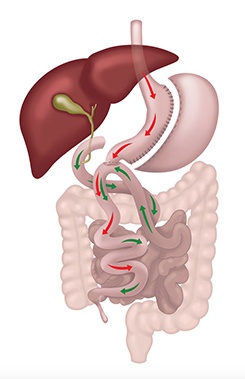
The SADI bypass is a powerful weightloss procedure that combines two procedures in one; a sleeve gastrectomy, and an intestinal bypass. Because the pyloric valve is kept intact, there is less risk of dumping syndrome that can occur after other types of bypass (especially the Roux-Y), and also less risk of bile reflux. There also less risk than other types of bypass of developing marginal ulcers in patients who regularly smoke or use anti-inflammatory medication.
How does SADI-S Bypass Work?
Like the other types of bypass, the SADI Bypass is a combined restrictive/metabolic surgical procedure. It is restrictive in the sense that it ‘restricts’ how much food the stomach can hold and is ‘metabolic’ in that it influences gut hormones, blood sugar regulation, and metabolism. This combination allows for very powerful weight control and significant improvement in metabolic problems associated with obesity such as hyperlipidaemia and diabetes.
One of the key benefits of the SADI Bypass is it very effective as a revision procedure after a previous sleeve gastrectomy. This is because the sleeve component has already been performed, and it is straight forward to add the intestinal component to complete the SADI bypass to address inadequate weight loss or weight regain.
Another important benefit of the SADI is that the risk of Marginal Ulcers on the surgical join is less than in other types of bypass. This benefit may be particularly relevant in patients who smoke (or vape), or use NSAID anti-inflammatories on a regular basis, as these factors greatly increase the risk of Marginal Ulcers in OAGB and Roux-Y bypass.
How is SADI-S Bypass Surgery Performed?
It is performed laparoscopically (keyhole surgery), using 5 small incisions. A stomach sleeve (approximately one cup) is first created by dividing the stomach using surgical staplers in exactly the same way as a stand-alone sleeve. Then the duodenum (first part of the intestine) is divided just after the pyloric valve, and surgically joined to the lower part of the small intestine, diverting the food stream away from the upper intestine. The procedure takes approximately 1-2 hours, and post op recovery is quick; and you will be able to walk comfortably and drink a wide variety of fluids including coffee, juices and soup that afternoon. One night in hospital is usual, and you can return to work and everyday life after 5-7 days.
The SADI Bypass is highly effective with multiple studies reporting continued weight control at several years and beyond. It is also especially good at treating diabetes, which will improve in the majority of cases, and even achieve complete remission in many instances.
As with all bypasses, another advantage is that they can be reversed if ever needed. However, because some of the small intestine is bypassed, there may be a reduction in the absorption of certain micronutrients and vitamins, and therefore ongoing vitamin supplementation and monitoring are important.
Who is Eligible for SADI-S Bypass?
To be considered for the SADI Bypass you will need to have a Body Mass Index of at least 35. CHECK YOUR BMI
The SADI Bypass may be especially appropriate for you if your BMI is greater than 45 and you have poorly controlled type 2 diabetes, and also are a smoker, or require daily NSAID anti-inflammatory medication. It is also an appropriate option if you have previously had a sleeve but experienced insufficient weight loss or weight regain.
What are the Risks and Complications of SADI-S Bypass?
As with any surgery there are potential risks involved. Whilst most patients do not have any problems after SADI Bypass, complications can sometimes occur, and occasionally be quite serious. Recovery and outcome may depend on the patient’s existing health status. Specific complications of the SADI Bypass include:
- Short term surgical risks may affect up to 1% of patients and include leakage from staple lines or anastomoses, blood clots, bleeding and anaesthetic complications
- Long term issues include loose bowels, vitamin deficiencies, acid reflux, gallstones, and marginal ulcers
Come in for your consultation where we will discuss the SADI Bypass in more detail including benefits and risks.
If you wish to be advised on the most appropriate treatment, please call to schedule an appointment or click to request an appointment online.